
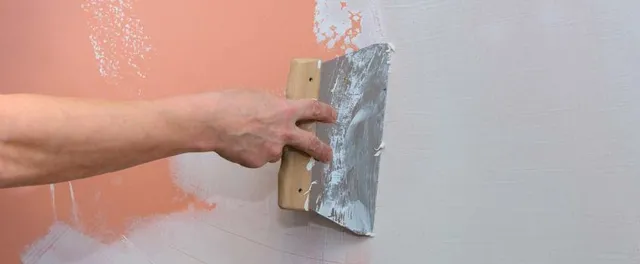
If your Schenectady-area home was built before 1978, there’s a real chance it has lead-based paint somewhere under newer coats — on trim, siding, doors, window sashes, or stair rails. That’s not a reason to panic, but it does change how prep work for a repaint legally and safely needs to be done. Here’s what the federal rules actually require, how to find out if you’re affected, and when it makes sense to call a Lead-Safe Certified crew instead of scraping it yourself.
The 1978 Cutoff — Why It Matters Here
The federal government banned lead-based paint for residential use in 1978. Homes built before that cutoff may still have it on the surfaces that got painted most — trim, siding, doors, window sashes, and stair rails — even if several coats of newer, lead-free paint have gone on top since.
That cutoff matters more here than in a lot of markets. Schenectady’s housing stock is old: county records put roughly 85% of homes at pre-1978 construction, with a median build year around 1941. That’s not unique to Schenectady, either — Albany, Troy, Scotia, and Rotterdam all share a similar mix of early-to-mid-20th-century housing. If you own an older home anywhere in the Capital Region, this applies to you more often than not.
How to Tell If Your Home Has Lead Paint
The EPA’s rule of thumb is simple: assume any home built before 1978 has lead-based paint somewhere, unless you’ve had it tested. The risk isn’t evenly spread, either — EPA data shows roughly 87% of homes built before 1940 contain some lead-based paint, compared to about 24% of homes built between 1960 and 1978. Given Schenectady’s 1941 median build year, a lot of local homes sit right at or past that higher-risk line.
A few visual clues can raise suspicion, though they’re not proof on their own: an alligatoring or crackled pattern in old paint (the same brittle, cracked look we cover in our piece on neglected exterior paint), chalky residue, or a chip that shows many stacked layers of paint when you look at the edge. None of that confirms lead on its own — testing is the only way to know for sure. Homeowners generally have three routes:
- EPA-recognized DIY test kits — the cheapest option, but EPA only validates them for use by Lead-Safe Certified renovators as part of a compliant work plan, not as a standalone homeowner check you can fully rely on.
- A certified lead inspector using an XRF (X-ray fluorescence) device — fast, non-destructive, and gives a definitive room-by-room or surface-by-surface answer.
- An NLLAP-accredited lab testing paint chip samples — slower, but thorough and often the most affordable definitive option.
What the EPA’s RRP Rule Actually Requires
If your home was built before 1978 and a contractor is going to disturb painted surfaces — scraping, sanding, cutting, demolition — during a repair, renovation, or paint job, federal law (the EPA’s Renovation, Repair, and Painting Rule) sets a real threshold: disturbing 6 square feet or more of painted surface on the interior, or 20 square feet or more on the exterior, triggers lead-safe work practice requirements.
In practice, a Lead-Safe Certified firm handles that work differently than a standard repaint: containment (poly sheeting to seal off the work area and contain debris/dust), wet-scraping and wet-sanding or HEPA-vacuum-attached sanding tools instead of dry sanding, no open-flame paint stripping, and a dust-clearance check before the area is considered clean. It’s more process, and it’s there because dry-sanding or scraping old lead paint is exactly how lead dust gets into a home’s air and settles into carpets, HVAC systems, and soil around the foundation — which is the real health risk, especially for young children and pregnant occupants.
Before hiring anyone to scrape, sand, or otherwise disturb paint on a pre-1978 Capital Region home, it’s worth asking directly whether the firm is EPA Lead-Safe Certified and asking to see their EPA Firm ID — a legitimate certified contractor will have no problem providing it.
DIY vs. Professional: When You Can Handle It, and When You Shouldn’t
Not every project on an older home requires calling in a certified crew. The line comes down to how much paint you’re disturbing, how it’s being disturbed, and who’s in the house.
Lower-risk, DIY-reasonable: A small touch-up on paint that’s intact (not chipping, cracking, or peeling), where you’re painting directly over the existing film rather than sanding or scraping it first.
Higher-risk, call a professional: Any project involving scraping, sanding, or heat-gun stripping over more than a small area; any home built before 1940 given the much higher incidence rate; and any home where children under 6 or a pregnant occupant live, where even a small amount of lead dust is a meaningful health risk. In those situations, the cost difference between DIY and professional lead-safe prep is not where to cut corners.
What This Means for a Real VividPro Project
This shows up across several of the services we do regularly on older Capital Region homes:
Exterior scraping and power washing: Prep work on pre-1978 siding and trim is exactly the kind of surface disturbance the RRP Rule is written for — see our guide on power washing before painting for how we approach exterior prep generally.
Interior trim and window repainting: Original window sashes, door trim, and stair rails in an older home are common lead-paint locations — the same surfaces covered in our interior painting cost guide.
Drywall repair that disturbs old paint layers: Cutting into a wall for repair work can expose or disturb painted layers underneath — relevant if you’re weighing drywall repair vs. replacement on an older home.
Kitchen and bathroom remodels touching original woodwork: Cabinet removal, trim replacement, and wall prep during a kitchen remodel or bathroom remodel can all involve disturbing old painted surfaces.
We follow lead-safe work practices on pre-1978 homes as a matter of course, not as an upsell — it’s part of doing the prep work properly, the same way we don’t skip priming or caulking to save time.
Selling an Older Capital Region Home? Disclosure Is Federal Law Too
If you’re getting ready to list a pre-1978 home, the federal Real Estate Notification and Disclosure Rule requires sellers to disclose known lead-based paint hazards and provide buyers an EPA pamphlet and a 10-day window to test, before the sale is final. That’s a real step in the selling process, not paperwork you can skip — worth reading alongside our guide on whether you should paint before you list.
Frequently Asked Questions
Is it legal to paint over lead paint myself?
Painting directly over intact, non-disturbed lead paint isn’t illegal for a homeowner doing their own home. The legal requirements kick in around disturbing the paint — scraping, sanding, or demolition — especially when a paid contractor is doing that work on a pre-1978 home above the 6 sq ft interior / 20 sq ft exterior threshold.
How much does lead paint testing cost?
It varies by method and region, but a certified inspector’s XRF test is typically the fastest and most definitive option, while an NLLAP-accredited lab test on paint chip samples is often the most affordable route for a single-room or single-surface check.
What happens if lead paint turns up mid-project?
Work should stop on the affected surface until lead-safe containment and work practices are in place. This is a normal, manageable pause on an older-home project — not a reason to abandon the job — but it does mean the prep timeline and approach change.
Do I have to disclose lead paint when selling my home?
Yes, if your home was built before 1978. Federal law requires disclosing known lead-based paint or hazards, providing an EPA information pamphlet, and giving buyers a 10-day opportunity to test before the sale is final.
Get a Straight Answer Before You Start
Whether it’s exterior scraping, interior trim work, or prep for a bigger remodel, we’ll tell you honestly what your project needs on an older Capital Region home — including when lead-safe practices apply.
Call or text 347-484-1724 or request your free estimate online. VividPro Painters & Remodeling — serving Schenectady, Niskayuna, Rotterdam, Scotia, Colonie, Albany, Troy, Clifton Park, Saratoga Springs, and the Capital Region.