
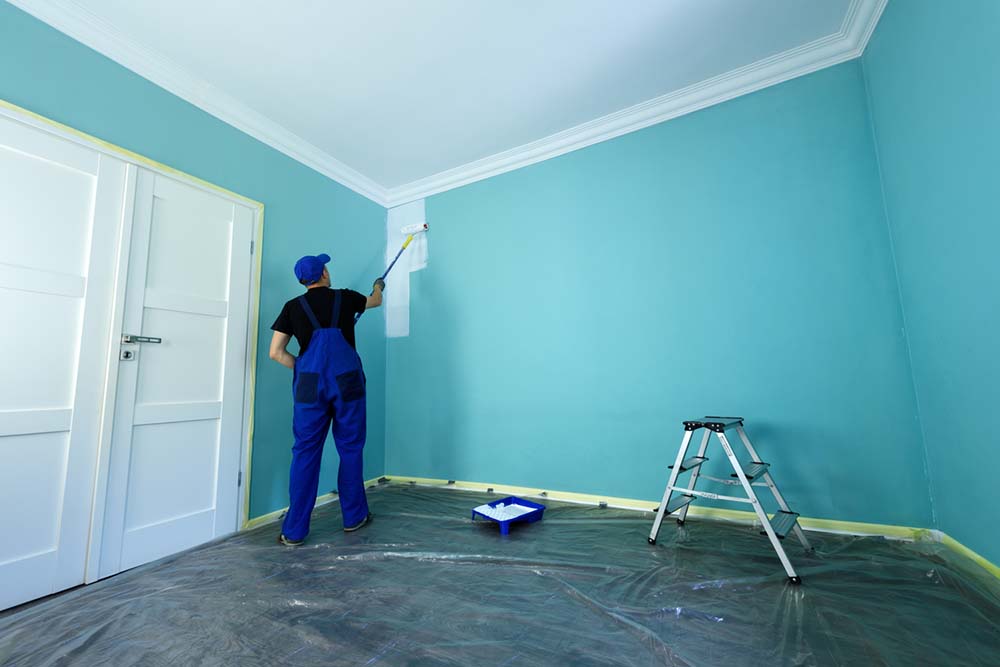
Early September is the best interior painting window of the year in the Capital Region. Dew points finally drop out of the 60s, so paint dries and cures on schedule. The weather is still mild enough to leave windows open for ventilation. And crews aren’t yet buried in the October-through-December holiday rush. Paint the same room in mid-August and you’re fighting the air itself.
How humidity actually affects interior paint
Latex and acrylic paint dry in two stages. First the water evaporates, which is what makes the surface dry to the touch. Then the resin particles knit together into a continuous film — that’s curing, and it takes days to weeks, not hours.
Humidity slows down both. Water evaporates into air that’s already holding water very reluctantly. Most manufacturers spec ideal conditions around 50% relative humidity and 60–85°F. In a Schenectady house in early August, interior relative humidity commonly sits at 65–75% even with the AC running, and higher in bathrooms, kitchens, and anything below grade.
What that looks like in practice
- Recoat times stretch. A wall paint rated for a two-hour recoat can need four to six. Ignore that and the second coat drags and lifts the first.
- Trim enamel stays soft. This is the big one. Doors and trim painted in high humidity feel dry but haven’t hardened. Close a freshly painted door against a freshly painted jamb and the two surfaces bond — painters call it blocking. It tears when you open the door.
- Dark colors streak. Surfactant leaching shows up as clear or brown runs on deep colors in humid rooms, usually within a day or two of painting.
- Adhesion suffers on glossy surfaces. Old oil-based trim needs a clean, dry, dulled surface. A faint film of condensation you can’t see is enough to cause peeling six months later.
- The room smells longer. Slower evaporation means the odor lingers days instead of hours.
Why September works in Upstate New York
Two things change at once around Labor Day. Overnight dew points drop into the low 50s, which pulls indoor humidity down without running a dehumidifier. And daytime highs settle into the 70s — warm enough that open windows help rather than hurt, unlike November, when opening a window means dropping the room below the minimum application temperature.
That combination — dry air plus usable ventilation — doesn’t happen again until late May. It’s the reason we tell homeowners that fall and winter are the best time to start interior work, and September is the front of that window, not the tail of summer.
How to paint through the last humid stretch
If you’re going ahead in late August or the first humid week of September, this is how the work gets managed properly:
- Run the AC or a dehumidifier the day before, not just during. You want the walls and trim themselves dry, not just the air. Twelve to twenty-four hours ahead makes a measurable difference.
- Move air across surfaces, not at them. Box fans aimed at a wall create lap marks and dry the edge of a wet section faster than you can maintain it. Set fans to circulate the room and exhaust out a window instead.
- Paint mornings and early afternoons. Humidity climbs after sunset. A coat put on at 6 p.m. spends the whole night trying to dry into rising damp air.
- Double the recoat wait on trim and doors. Whatever the can says, add time. Twenty-four hours between coats on enamel is not overkill in humid conditions.
- Leave doors open and hardware off for 48–72 hours. This single step prevents almost every blocking failure.
- Don’t paint a wall that had condensation on it that morning. Common on exterior-facing walls in air-conditioned rooms. Wipe, dry, wait.
Sheen matters more in humid rooms
Flat paint has the least binder and the most open film, which is exactly wrong for a bathroom, a kitchen, or a basement stairwell. Satin and semi-gloss shed moisture, resist mildew growth better, and clean without burnishing. In older Schenectady homes with original plaster, we’ll usually run eggshell or satin in living spaces and semi-gloss on all trim. The full breakdown is in our room-by-room guide to interior paint sheen.
The right order of operations
Sequence matters more when dry times are unpredictable:
- Repairs first. Patching, skim coats, and nail pops need to dry fully — and joint compound dries slower in humidity than paint does. Drywall repair that isn’t fully cured will telegraph through the finish coat.
- Ceilings, then walls, then trim. Trim last so it isn’t getting hit with overspray or roller spatter after it’s set.
- Doors last of all, so they can hang open for two or three days without holding up the rest of the project.
Booking: why late summer is when to call, not when to decide
Interior painting demand in the Capital Region spikes from mid-October through the first week of December — everyone wants rooms finished before family arrives. If you want a specific week in November, late summer is when that gets locked in. Calling in the last week of October for a pre-Thanksgiving project usually doesn’t work.
Pricing hasn’t changed with the season: an average 12×12 room runs about $750, and whole-house numbers are laid out in our 2026 interior painting cost guide. If you’re still deciding whether it’s time, our list of 7 signs it’s time to repaint is a fast gut check, and the 2026 color guide will save you a weekend of sample pots.
Get on the fall schedule
VividPro Painters & Remodeling does interior painting in Schenectady and throughout the Capital Region — Albany, Troy, Niskayuna, Scotia, Rotterdam, Colonie, and Clifton Park.
Get a free interior painting estimate → or call 347-484-1724.
Frequently asked questions
What humidity is too high for interior painting?
Above roughly 70% relative humidity, dry and recoat times stretch significantly and trim enamel may not harden properly. Around 85% and above, most manufacturers advise against application entirely. The ideal range is 40–50%.
Can I paint inside with the air conditioning running?
Yes, and you generally should in late summer. AC removes moisture from the air, which speeds drying. Just avoid pointing a vent or fan directly at a wet wall, since that dries the surface unevenly and causes lap marks.
How long should I wait between coats in humid weather?
Add roughly 50–100% to whatever the label says. A two-hour recoat becomes four; a four-hour recoat becomes eight. On doors and trim, waiting a full 24 hours between coats is the safe call.
Is it better to paint interiors in summer or fall?
Fall. Lower humidity means faster, more reliable curing, and contractors have more schedule availability once exterior season winds down. September through December is the strongest interior painting window in Upstate New York.
How long before I can put furniture back against a freshly painted wall?
Wait at least 48 hours in dry conditions and 72 hours if humidity is high. Paint is dry to the touch long before it’s cured, and pressing furniture against a wall that hasn’t hardened leaves marks.