
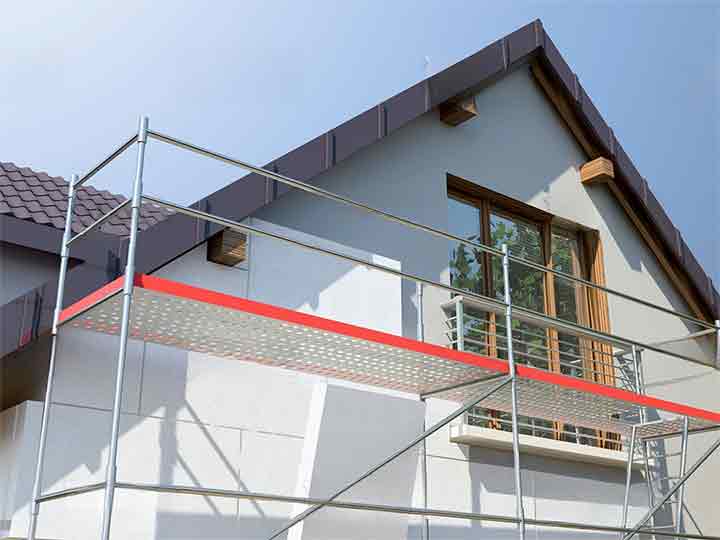
If you’re getting quotes for painting or a small remodel in Scotia, here’s the short version: exterior painting on an average-size home typically runs $3,000–$9,500, a larger or more detailed home runs $9,000–$16,000+, interior rooms run $350–$650, and a bathroom refresh starts around $4,000. Scotia packs a lot of housing history into a small village — just across the Western Gateway Bridge from Schenectady — and that history shows up in your quote more than in most towns we serve. Here’s a straight answer built from the same pricing we quote across the region, plus what’s actually different about painting a Scotia home.
Scotia Painting & Remodeling Costs at a Glance (2026)
| Project | Typical Range |
|---|---|
| Exterior painting, small ranch/cape (under 1,200 sq ft) | $3,000 – $5,500 |
| Exterior painting, average 2-story (1,500–2,200 sq ft) | $5,500 – $9,500 |
| Exterior painting, larger or older village home (2,500+ sq ft, heavy prep) | $9,000 – $16,000+ |
| Interior room (walls only) | $350 – $650 |
| Whole-house interior (1,500 sq ft) | $3,500 – $7,000 |
| Cabinet painting/refinishing | $2,500 – $6,500 |
| Bathroom remodel (cosmetic refresh) | $4,000 – $8,000 |
These track closely with what we quote across Schenectady, Rotterdam, and the rest of the Capital Region. What actually moves the number in Scotia isn’t the neighborhood — it’s which era of the village your home was built in, because Scotia has two very different housing generations standing a few blocks apart.
Why Scotia’s Housing Stock Is Different
Scotia takes its name from land Alexander Lindsay Glen acquired from the Mohawk people in the 17th century and named after his native Scotland. That early settlement left behind some of the oldest standing homes in the Capital Region, and the village grew up around them in two very different bursts since.
The 18th-century riverfront: Glen Sanders Mansion and the Abraham Glen House
Parts of the Glen Sanders Mansion date to 1713, and the nearby Abraham Glen House — built in the 1730s and listed on the National Register of Historic Places in 2004 — is a rare surviving example of heavy-timber Dutch Colonial construction in this region: mortise-and-tenon framing, a mortared fieldstone basement, a steep gable roof with shed dormers, and brick chimneys at each end. Homes from this era (and the smaller vernacular houses built in the same style nearby) typically have decades of paint layers over old wood trim and siding, and real masonry work in the foundation — the kind of job that needs careful scraping, priming, and sometimes lead-paint precautions rather than a quick wash-and-coat.
The GE-era boom: Scotia triples in size
Scotia’s population exploded in the early 1900s as it became a bedroom community for Schenectady’s General Electric workforce — from 2,957 residents in 1910 to 7,960 by 1940, nearly tripling in three decades. The Holland House, a grand 1914 mansion built for the W.T. Mynderse family, is one visible marker of that era’s larger, more detailed homes, while most of the surrounding streets filled in with the solid two-story foursquares and bungalows typical of a GE-boom-era village. These homes are usually original wood clapboard that’s been repainted many times over, or sided over decades ago — prep here is more about surface condition than structural age.
Village-scale infill and later construction
Beyond those two eras, Scotia’s compact village footprint means later infill and postwar construction sit close by on the same streets, mixed in rather than grouped into their own subdivisions the way a larger town might see. That mix is part of why we never quote a Scotia home by square footage alone.
The takeaway: a phone quote based only on square footage doesn’t mean much in a village where a 1730s timber-frame house and a mid-century foursquare can be across the street from each other. We walk the property and tell you which category your home falls into before we give you a number.
The Next Few Weeks Are the Window for Exterior Work
Same rule applies in Scotia as everywhere else in the Capital Region: modern exterior paint needs warm enough days and dry enough nights to cure properly, and that window closes fast once October turns into November. If your Scotia home has peeling trim or chalky siding you’ve been meaning to deal with, this is close to the last good stretch of the year to get it done before winter freeze-thaw cycles make things worse. If the siding hasn’t been washed since last season, see our pressure washing cost guide — paint applied over dirt and mildew fails early no matter how good the paint is.
Beyond Painting: Remodeling and Basements in Scotia
VividPro Painters & Remodeling handles more than paint — the same crew that repaints your Scotia exterior can also handle drywall repair, interior remodeling, and bathroom updates, so you’re not juggling separate contractors for a project that touches more than one trade.
Basements are worth a specific mention given how close Scotia sits to the Mohawk River, right across the Western Gateway Bridge from Schenectady. The village’s oldest homes — the ones with fieldstone foundations like the Abraham Glen House — predate modern drainage standards entirely, and river-adjacent lots generally sit nearer the water table than homes further from the water. If your Scotia basement smells musty, shows chalky white deposits on the walls, or takes on water during spring thaw, that’s a job for actual waterproofing — sealing, grading, and drainage, not paint. See our basement waterproofing service or our Scotia French drain & sump pump cost guide for real pricing on French drains and sump systems.
Scotia Homeowner FAQs
Do you actually serve Scotia, or just Schenectady?
Yes — Scotia is just across the Western Gateway Bridge from our Schenectady home base, and it’s one of the closest communities we serve. See our Scotia service page for the full list of what we offer there.
Is pricing different in Scotia than in Schenectady?
Not by town — by house. A GE-era foursquare in Scotia and a similar-sized home in Schenectady cost about the same to paint. What actually moves the number is the home’s age, siding material, and how much prep the last paint job left behind.
My home is an older Dutch Colonial-era house near the river — does that change anything?
It can. Scotia’s oldest riverfront homes often have original timber framing, fieldstone foundations, and many layers of old paint, so prep and lead-safe work practices typically add more time than on a mid-century home. We’ll walk the property and factor that into your quote rather than guessing from a photo.
How far out do you book for Scotia estimates?
Estimates are usually scheduled within a few days since we’re based right across the bridge in Schenectady. Actual project start dates depend on the season — fall exterior slots fill up fastest since everyone’s racing the weather at the same time.
Get a Free Estimate in Scotia, NY
Want an exact number for your Scotia home instead of a range? We’ll walk the property, look at what the existing paint and siding need, and give you a written, itemized quote — free, no pressure.
📞 Call or text 347-484-1724 or request your free estimate online. VividPro Painters & Remodeling is based in Schenectady and proudly serves Scotia and the entire Capital Region — see our full Scotia service page.